Image 1. French Carabiniers a Cheval
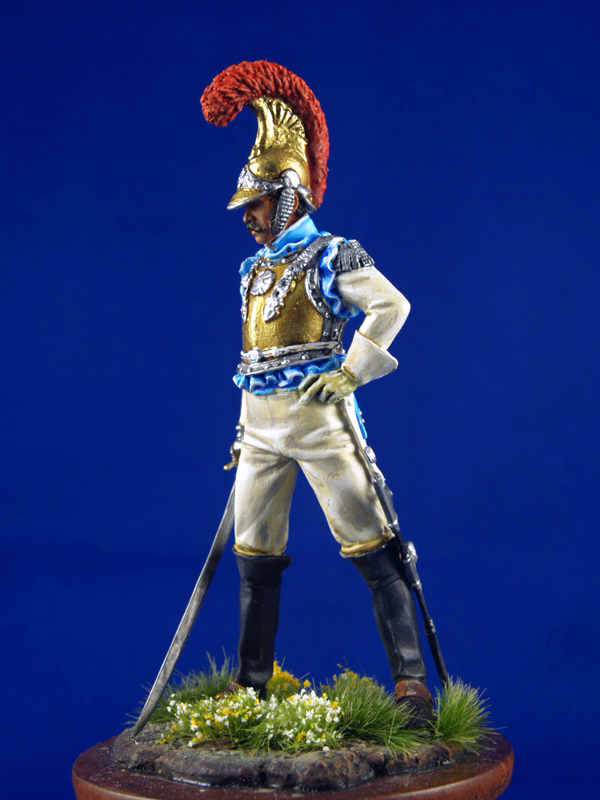
Manufacture, Pegaso, 75 mm Italy, metal
The carabiniers were a pair of heavy cavalry regiments that followed Napoleon throughout many of his campaigns, participating in the wars from 1805 to 1815. They campaigned between Germany and Poland from 1805 to 1809, suffered the disaster of 1812, renewed themselves in Saxony and Northeastern France the next two years, and in 1815 fought in Belgium under the Emperor a final time. After the defeat in 1815, the Royalist military merged the two regiments
The figure was one of my first 75 mm figures, Pegaso is known worldwide for its quality, this was no exception. I have won several contest with this figure and it is easy when you start with a high quality figure.
Image 5. American Sniper
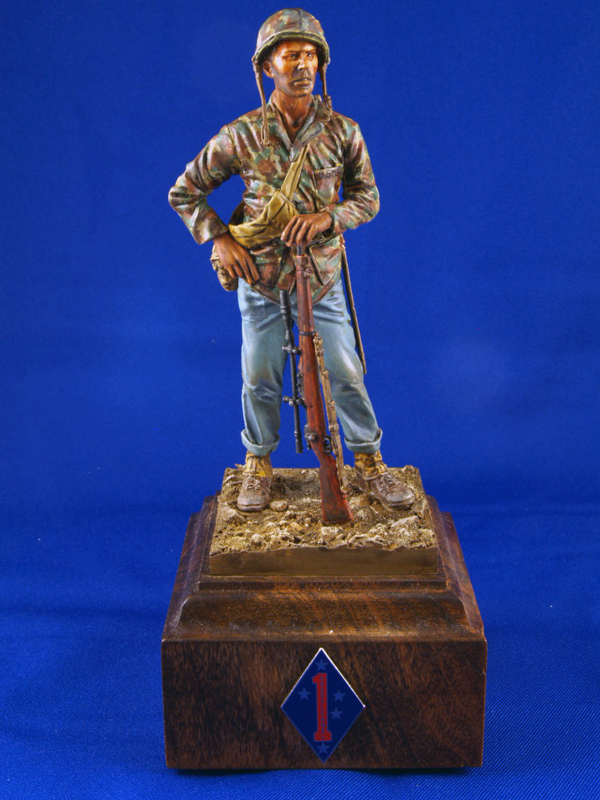
Manufacture Michael Roberts USA, 120 MM Resin
The figure represents American Snipers during the invasion of Saipan, they operated behind enemy lines during the battle causing confusion amongst the enemy.
I painted this figure almost 25 years ago and it still holds up in the quality of sculpting. I painted in in Oils and Acrylics. The weapon of choice for Marine Snipers during WW2 was the Unertl-Scoped 1903 Springfield.
Image 8. Napoleonic Marine Tambor (Drummer)
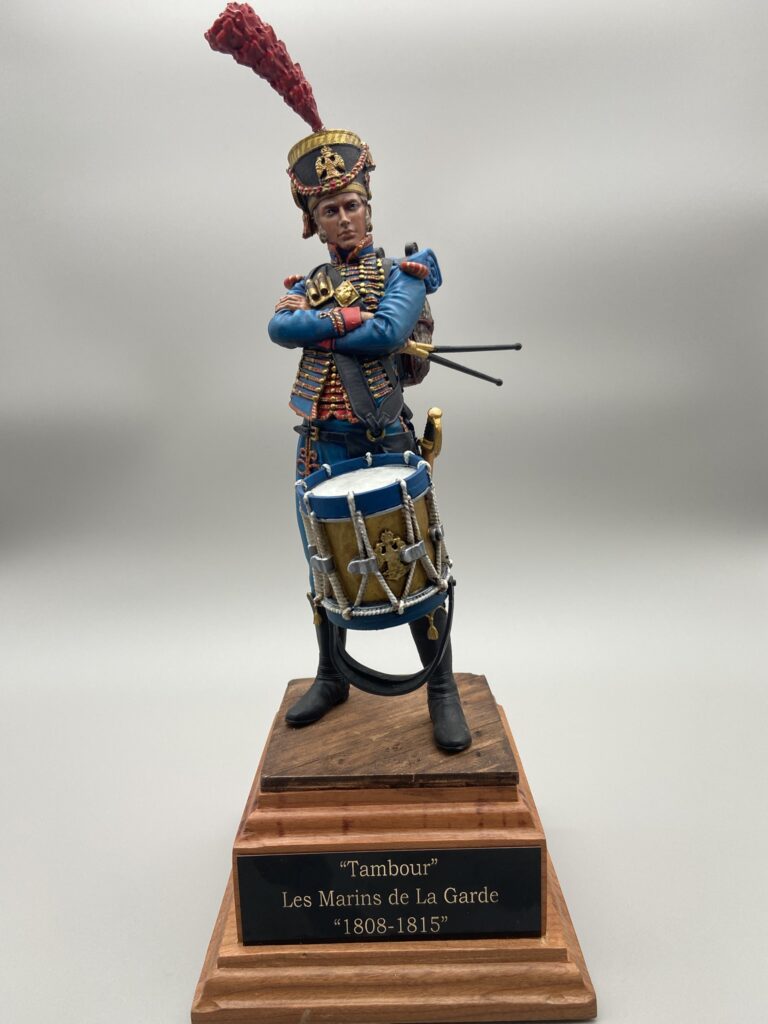
Manufacture Mitches Model Works UK, 200 MM Resin
In March of 1808 Napoleon Ordered 50 Marine Battalions be raised and assigned to ships of the French Fleet. Because of the British blockade the marines spent most their time maintaining the ships they were assigned to.
The 200 mm figure was the first full body 200 mm I have painted and because of its size you need to really plan how you are going to attack it. The figure is a Nelleo Rivieccio sculpture, which I own many now. The figure assembly is straight forward with little cleanup; the fit is excellent. The figure is painted with Oils and Acrylics as well an airbrush
Image 9. Napoleonic French Cuirasses
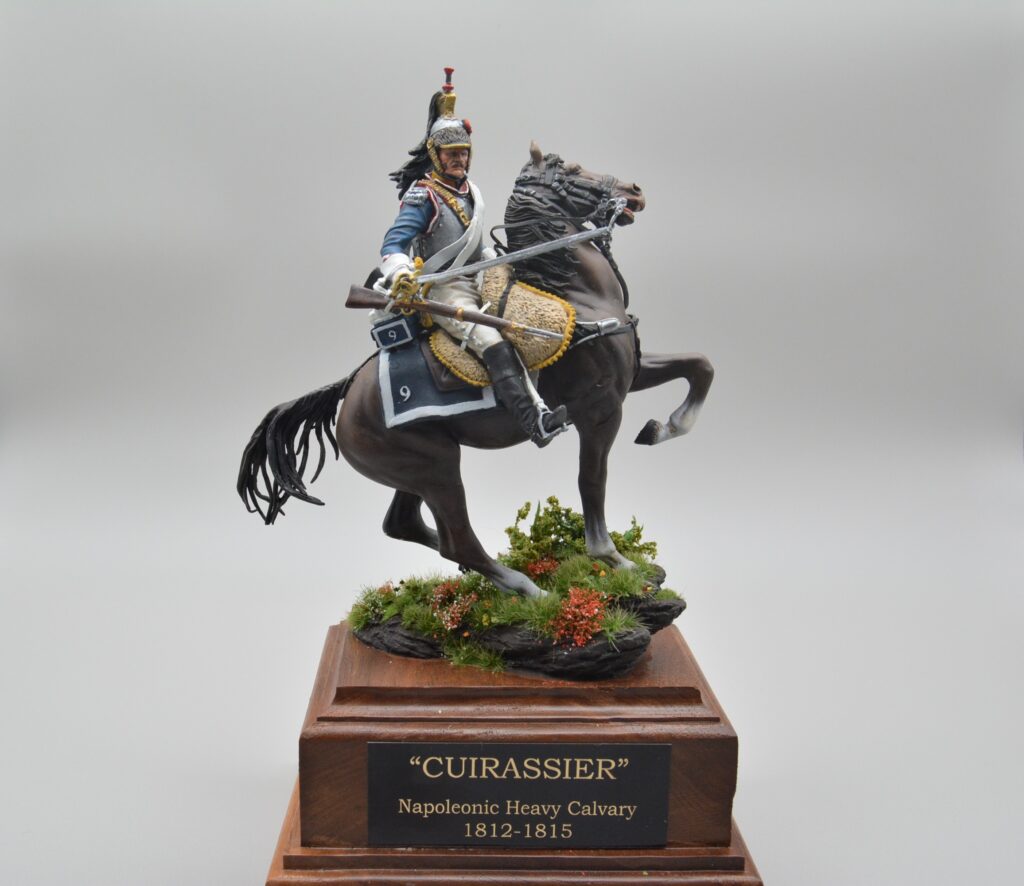
Manufacturer: Andrea Miniatures, 90 mm Spain
On 17 September 1802, Napoleon ordered the heavy cavalry within the army to be reduced to eighteen regiments cuirassier( elite heavy cavalry units), Originally, only six of these units were to be issued the cuirass; however, by the end of 1803 twelve regiments of armored heavy cavalry existed within the French army. ‘l’wo more regiments of Cuirassier were added by 1810, and the two Carabinier regiments were armored after taking heavy casualties during the 1809 campaign.3 Therefore, there were a total of sixteen armored cavalry regiments in the French army at the height of the Napoleonic Empire
The kit was started and sat on my shelf for about 4 years, I was not happy with the way it was going so I just stopped. I took another look at it this year (2026) and thought it was not that bad, so I went back in correcting a few mistakes and finished it. The problem with the kit was not the kit, it was the painter. When I figured out where I was going wrong it became simple as most Andrea Miniatures figures are to paint.
Image 10. Mayan Warrior
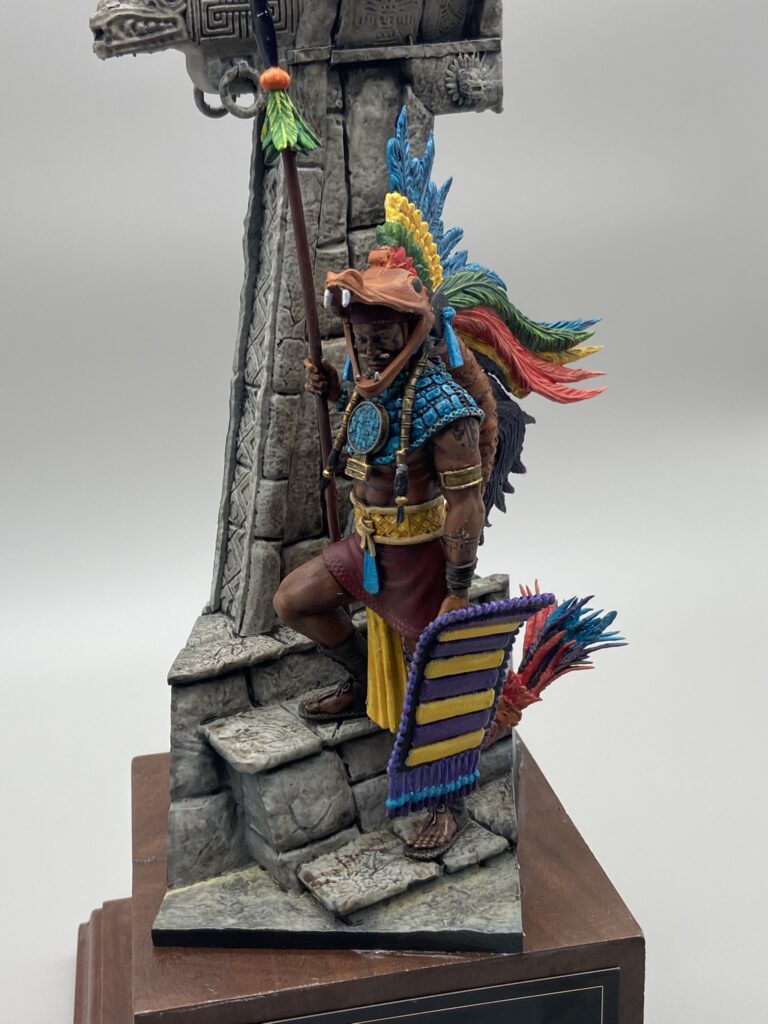
Manufacture Mitches Model Works UK, 120 MM Resin
Elite warriors were more than mere soldiers; they were symbols of power and prestige, integral to the political and religious fabric of Maya life. Their involvement in warfare was deeply intertwined with ritualistic practices and societal expectations, which elevated their status above that of ordinary citizens. Understanding the dynamics of these elite fighters and their impact on warfare provides valuable insights into the broader historical context of the Maya civilization.
Image 64 Pretorian Guard Rome
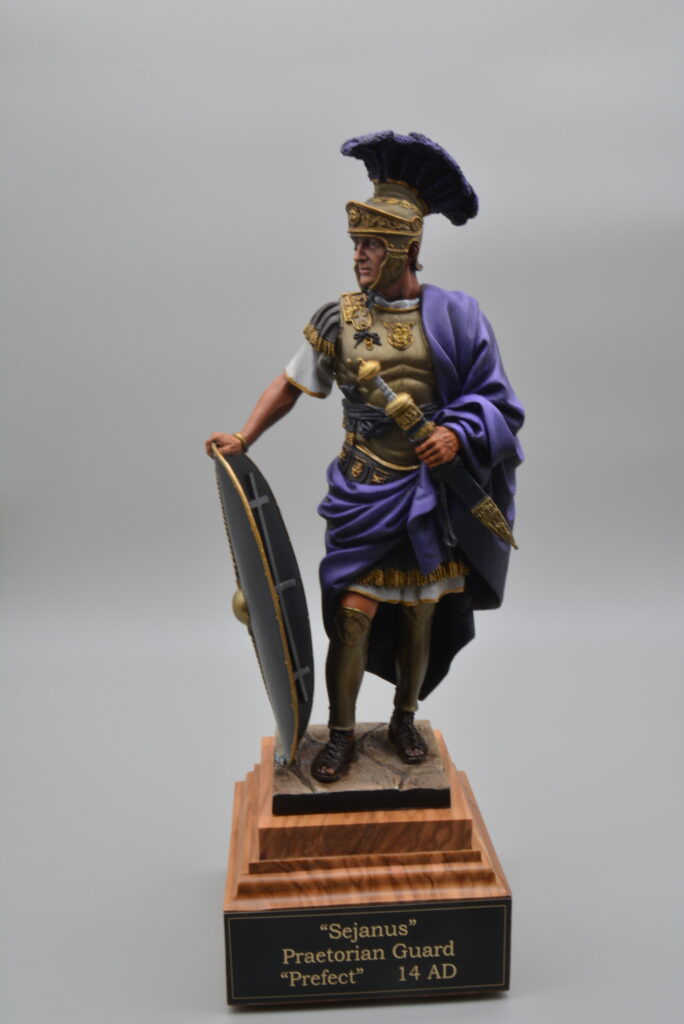
Manufacturer: Unknown, 200 mm Acrylics/Oils
The Praetorians were initially elite guards for military praetors (Generals), under the republic.[4] The early Praetorian Guard was very different from what it became later, as a vital force in the power politics of Rome. This Figure represents the Pretorian Guard in its final version as the personal guard for the Emperors of Rome.
Image 71. M113
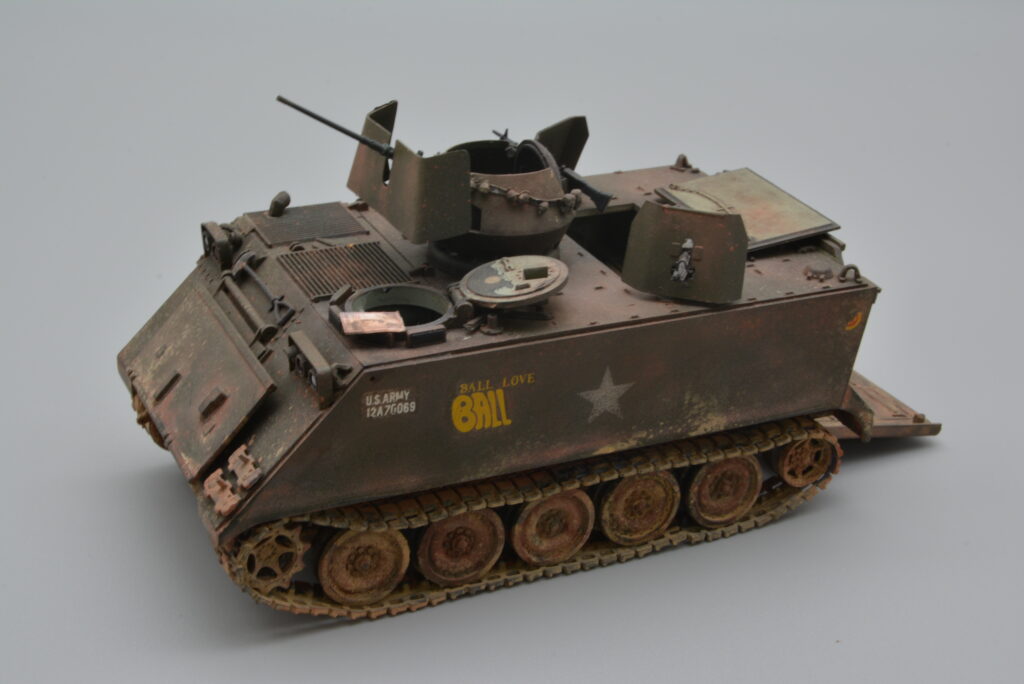
Manufacturer: Tamiya Model Company 1/35 Scale
The M113 is a fully tracked armored personnel carrier (APC) that was developed and produced by the FMC Corporation. the M113 was the most widely used armored vehicle of the U.S. Army in the Vietnam War and was used to break through heavy thickets in the midst of the jungle to attack and overrun enemy positions. It was largely known as an “APC” or an “ACAV” (armored cavalry assault vehicle) by the allied forces.
This model was produced by Tamiya Model Company, its over 20 years old but still holds up with simple construction and very good fit. The model has lots of aftermarket products provided by multiple manufacturers to allow you to customize your project
Image 76, M113A1
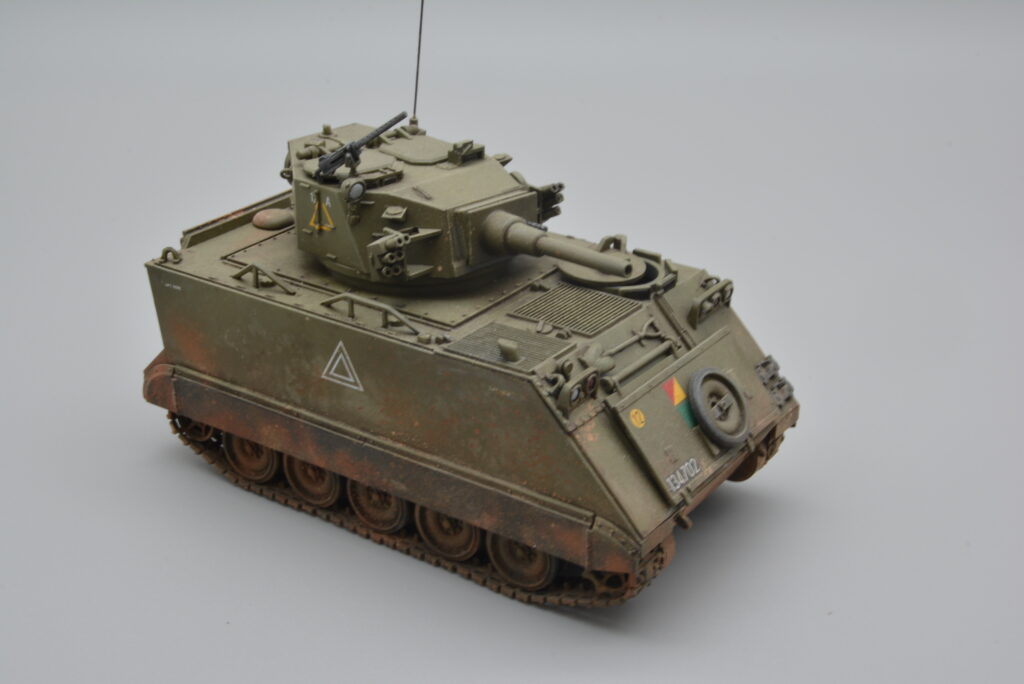
Manufacturer: Tamiya 1/35 scale
The Australian Army acquired the M113 in the early 1960s, selecting it over other tracked vehicles due to its suitability for tropical conditions and amphibious capability.
The first bulk delivery of M113A1 APCs began in 1965, with a troop of eight from the 4th/19th Prince of Wales’s Light Horse assigned to the 1st Battalion, Royal Australian Regiment, and
deployed to South Vietnam in May 1965.
The M113 provided protection against small arms and allowed troops to traverse challenging terrain, including
jungle and river crossings.
A 20 Year+ model kit that goes together very good, no fit issues. The kit was straight out of the box
Image 81, Guard Imperiale Chasseur d Cheval
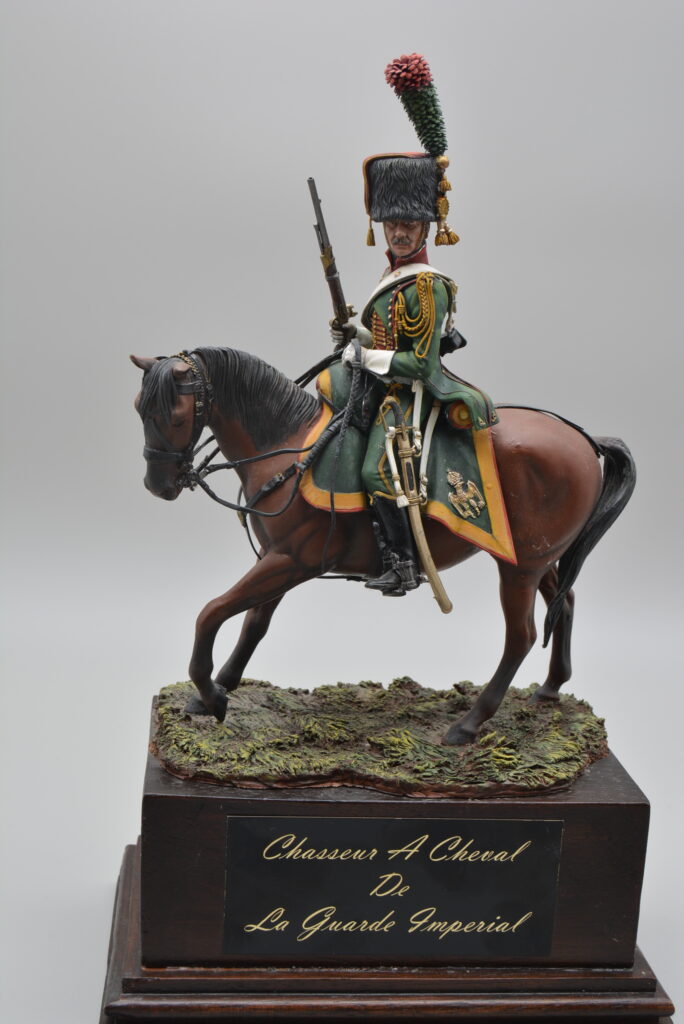
Manufacturer: Poste Militaria 120 mm Metal
The horse Chasseurs were Light Calvary used as the “eyes and ears of the army”. The light Calvary formed the advance and rear guards of the army. Several of their duties were Scouting the enemy, attacking stores and defending the flanks of charging Cuirassiers and Dragoons. The Chasseurs were also Napoleons Personal Guard until his defeat at Waterloo.
I had this kit in my collection for 15 years + till I final decided to take a shot at it. The Kit is metal and can sometimes be a pain but the engineering on this kit was excellent. The kit was a pleasure to build and paint. I enjoyed it so much that I recently purchased it again to do another version of it. The kit was Modeled after a famous painting by renowned French Artist L.
Roussel.
Image 89, Geroge Armstrong Custer
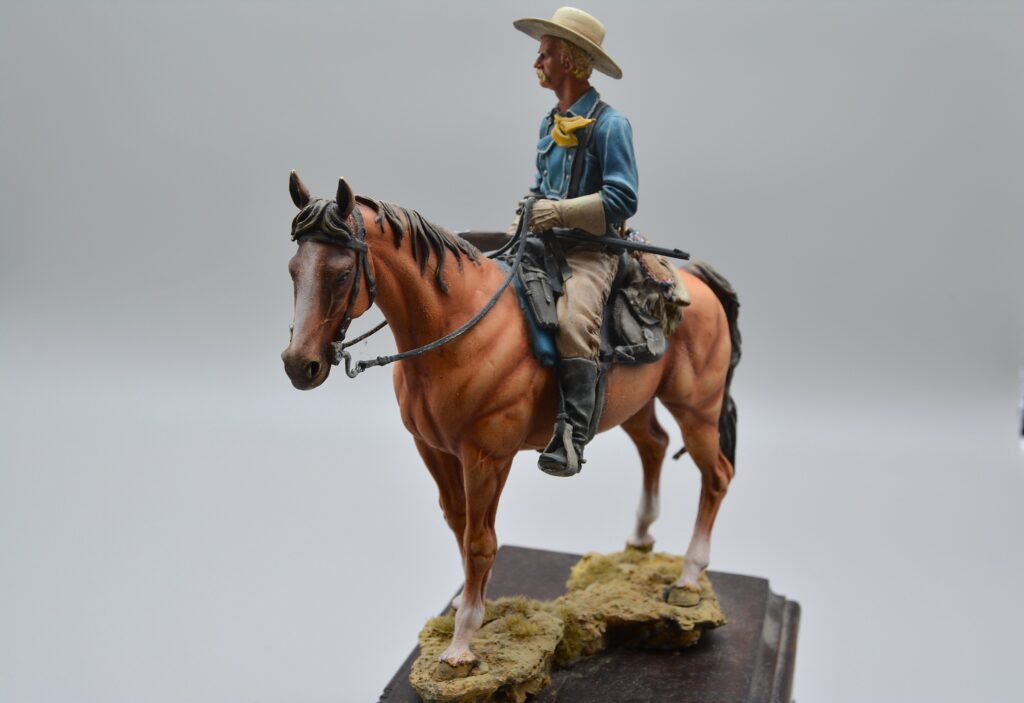
Manufacture: Andrea Miniatures 90 mm “Son of Morning Star”
IPMS Nationals 2021 First Place
George Armstrong Custer was a United States Army officer and calvary commander during the Civil War and Indian wars, best known for his defeat at the Little Big Horn.
The Kit was well engineered and went together with no real problems, metal kits take some time to figure out how to assemble and they take time. The kit again was a pleasure to paint like most Andrea Miniature kits, The kit is painted in Oils and Acrylics